
The return of texture: why autumn dressing begins with fabric
- Chloe Sinclair-Woods
- 2 days ago
- 4 min read
Autumn dressing rarely begins with a coat. In Britain, it begins much earlier, in the subtle moment when linen starts to feel too summery, evenings become cooler and the wardrobe begins to ask for something with a little more substance.

For Autumn/Winter 2026, that shift is especially visible. Across the London collections and the wider British fashion conversation, designers are giving fabric a more prominent role. British Vogue describes AW26 as a season moving beyond algorithmic sameness towards personality, styling and a greater sense of imagination, while London Fashion Week saw tactile surfaces, brocade, embellished knitwear, shearling and deliberately touchable finishes return to prominence.
The result is an autumn that feels less concerned with dressing according to a rigid aesthetic and more interested in how clothes actually feel, move and interact.
Texture is becoming the new form of contrast
For several seasons, restrained wardrobes were largely built through colour: cream with camel, grey with charcoal, navy with ivory. AW26 does not abandon that sophistication, but it adds another dimension.
A neutral outfit becomes considerably richer when smooth tailoring sits beside a brushed knit, when crisp cotton is paired with wool, or when soft mohair breaks up the clean line of tailored trousers.
This approach was visible beyond the runway, too. London Fashion Week street style demonstrated how neutral palettes could remain interesting through a mixture of wool-cashmere outerwear, fine-gauge knits, pleating and smooth leather. The interest came from the surfaces rather than from loud colour combinations.
For women who prefer a quieter wardrobe, this is perhaps the most wearable idea of the season. Texture creates interest without asking you to abandon restraint.
Knitwear is no longer simply the layer underneath
Knitwear remains one of the foundations of British autumn dressing, but its role is changing.
Rather than functioning purely as an invisible layer beneath a jacket, knits are becoming the focal point. British Vogue has highlighted sculpted shoulders, crochet, open-knit constructions, zip-through styles and craft-led finishes across 2026, while current autumn reporting points towards striped knits, cashmere wraps and more tactile, personality-led sweaters.
Fluffy and brushed surfaces are particularly relevant. Mohair and wool blends can introduce softness into an otherwise structured look, while ribbing and cable textures add depth without relying on pattern.
The easiest way to wear the idea is also the simplest: pair a tactile knit with something deliberately clean. Wide-leg tailoring, a straight skirt or dark denim gives the fabric space to become the point of interest.
Tailoring is softer, not less refined
Another important AW26 shift is the relationship between structure and softness.
The season still values tailoring, but the most modern interpretations are not excessively rigid. British Vogue’s AW26 report points to hourglass blazers, adjusted waistlines and subtle changes in proportion rather than tailoring that feels aggressively corporate.
This is where tweed, wool blends and softly textured jackets become particularly useful. They hold a silhouette while introducing warmth and visual depth.
A textured jacket over a lightweight top, for example, can feel unmistakably autumnal without requiring a heavy winter coat. It also responds particularly well to the unpredictability of early British autumn, when mornings, afternoons and evenings can seem to belong to three different seasons.
The summer wardrobe does not disappear overnight
One of the strongest ideas emerging from British fashion editors this season is that transitional dressing should be gradual.

British Vogue recommends carrying summer staples such as white T-shirts and denim into autumn, then introducing cashmere, blazers, tailored trousers, leather boots and other increasingly substantial layers. Its recent transitional coverage similarly argues for a slow seasonal shift rather than an abrupt wardrobe change.
That makes fabric particularly important in September.
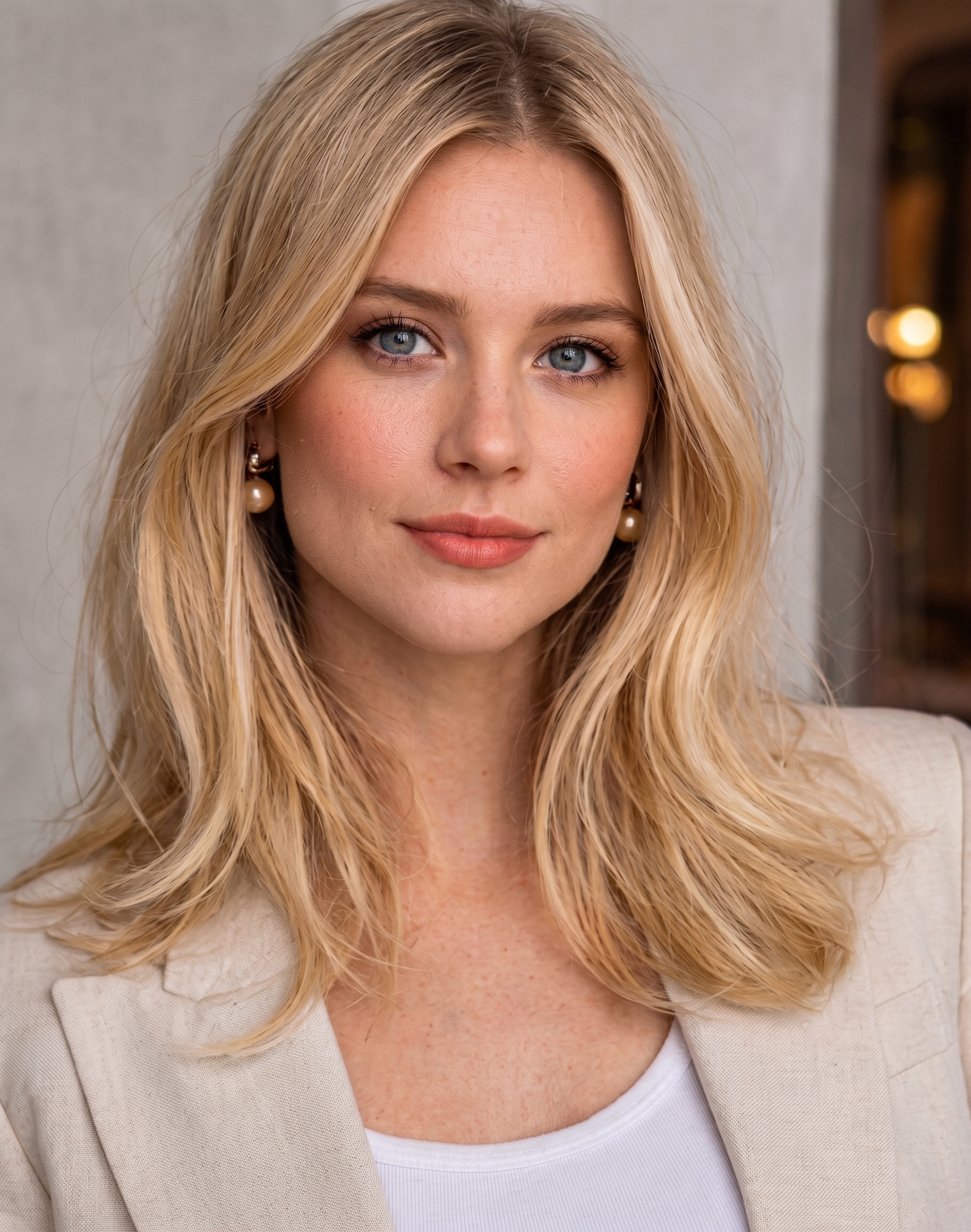
A silk-linen piece can still belong in early autumn when paired with wool tailoring. A cotton blouse gains new purpose beneath knitwear. Lightweight trousers become autumn-ready alongside a textured cardigan. Even a pale palette can feel appropriate for the season when the materials become richer.
Autumn, in other words, is not necessarily a change of colour. It is often a change of weight, surface and layering.
Why this matters in 2026
There is something particularly appealing about this renewed attention to fabric now.
Fashion is increasingly saturated with images designed to register instantly on a screen. Texture resists that flatness. Tweed has irregularity. Mohair catches light differently as it moves. Linen creases. Wool has depth. Ribbing creates shadow.
These details make clothes feel more individual and less algorithmically perfect, a wider movement that British Vogue has identified across recent collections.
And that may be the most interesting lesson of AW26: sophistication does not have to come from adding more. Sometimes it comes from noticing more.
The weave of a jacket. The softness of a knit. The contrast between a crisp shirt and a brushed surface. The way several quiet materials can make a restrained palette feel unexpectedly rich.
The first shift of the season

That idea sits at the heart of The Early Autumn Edit, Chapter I of AW26 at The Maura Collection.
The edit explores the beginning of autumn through tactile knitwear, softly structured tailoring, refined cottons and considered layers designed for the weeks when the season is changing rather than fully settled.
Because the first sign of autumn is not always a falling leaf or a darker colour palette.
Sometimes, it is simply the moment you begin to reach for texture again.
Discover The Early Autumn Edit at The Maura Collection.
Curated Luxury, Timeless Elegance.

Comments